
Ancient vines, deep red soils, and a handful of producers doing something genuinely extraordinary.
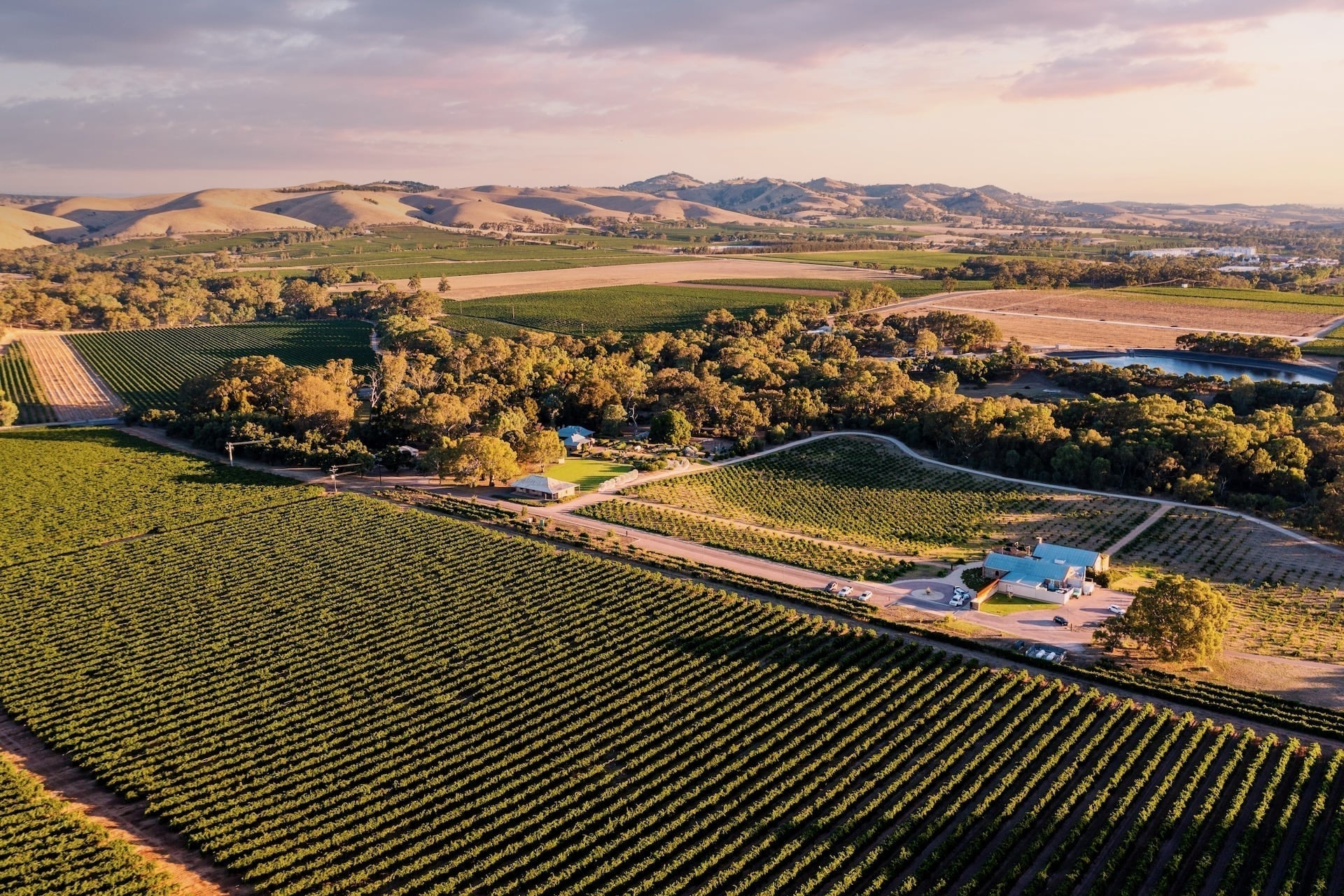
There are wine regions, and then there are wine regions that feel like they belong to another time entirely. The Barossa Valley is the latter. An hour’s drive north of Adelaide in South Australia, it’s a place of wide skies, Lutheran church spires, and gnarly old vines that have been in the ground so long they predate most of the world’s famous wine estates. Come harvest season, the air smells of fermenting fruit, and it has for well over a century.
To understand the Barossa is to understand that age, here, is everything. While most of the world’s great wine regions routinely replant their vineyards, the Barossa’s vines were largely spared the devastation of phylloxera — the vine louse that swept through Europe in the late 19th century and forced mass replanting. The result is a concentration of ungrafted, dry-farmed old vines that is almost unique in the world. Some are approaching 170 years old.
|
170+ YEARS, OLDEST VINES |
1842 FIRST VINES PLANTED |
~150 WINERIES IN THE VALLEY |
The land and the grape
The Barossa sits in a bowl of rolling hills, its floor lined with red-brown soils rich in iron, clay, and ancient minerals. The climate is warm and dry — Mediterranean in character, with hot summers and cool winters that push the vines into productive stress. Rainfall is low enough that most old vines are dry-farmed, meaning no irrigation. The vine roots go deep, sometimes metres into the subsoil, drawing up complexity from layers of earth that no winemaker could replicate in a laboratory.
Shiraz is the Barossa’s great variety, and arguably its defining one. But the picture is richer than that. The valley also produces exceptional Grenache and Mataro (Mouvèdre) — the old Rhône trio — as well as Riesling from the cooler, elevated Eden Valley to the east, and a constellation of other varieties planted by the German, Silesian, and British settlers who first arrived in the 1840s. Many of those original plantings remain.
“In the Barossa, the vine doesn’t just reflect the vintage — it reflects 150 years of the same soil, the same site, the same roots going deeper every season.”
What Barossa Shiraz actually tastes like
This is worth addressing directly, because Barossa Shiraz has a reputation that sometimes precedes it unfairly. Yes, it is full-bodied. Yes, it is rich. But the finest expressions are not just hedonistic fruit bombs — they are complex, structured wines with a savoury, meaty depth that makes them compelling at the dinner table. Think dark plum and blackberry, iron and graphite, dried herbs and leather, with a spice that comes not from oak but from the grape itself. That white pepper and licorice note is a Shiraz fingerprint, and in the Barossa it comes through with particular authority.
The best Barossa Shirazes age magnificently. We’re talking decades, not years — wines that shift from opulent purple fruit to something earthy and savoury and profound, more reminiscent of great Northern Rhône Syrah than of anything you’d find on a supermarket shelf.
Producers worth knowing
The Barossa has no shortage of names. But among the producers we carry, three in particular capture something essential about what the region does best — each approaching the land from a different angle, each making wines that are unmistakably Barossa and unmistakably their own.
Powell & Son / Neldner Rd - Western Barossa / Eden Valley
Dave Powell’s Rhône-inspired single-vineyard wines from old vines he has tended for over two decades. Restrained, elegant, and built for the long haul.
Kalleske - Greennock / North-West Barossa
Seven generations on the same land since 1853. Certified organic and biodynamic, with vines dating to 1875. A byword for purity and terroir expression.